Wednesday, March 9, 2011

Another King, Another Colony, And More Explorers

Do you remember Mary Queen of Scots? She had a son named James who became the king of Scotland after she died. (He is the king in the title.) James also inherited England, because Elizabeth the First left her throne to him. So now James was the king of two countries. What is the first thing you would do if you became king? You might want to fortify your kingdom against attack or start educating your people. But what did James do? He did not do those things. He made enemies of the Protestants, the Catholics, and the Parliament.
                   First, he made the Puritan Protestants angry. They came to him with a petition to purify the English church of all Catholic ideas. Even though James was Protestant, he rejected all their ideas and sent them home. He decided that whatever he wanted was what God wanted. He also made Puritan church services illegal.
               Next, he made the Catholics angry. He ordered all the Catholic priests to go out of the country. He made a law that if anyone went to a Catholic service, he would have to pay a fine. But not all the people agreed with this law, as you can probably guess. Two men, Robert Catesby and Guy Fawkes, dug a tunnel under the building where Parliament had meetings. They would smuggle barrels of gunpowder into the house. But before the explosion could take place, Fawkes was discovered holding a match, and he was put to death.
          But soon, Parliament got angry at James, too. Because James insisted that whatever he wanted was the will of God, he fired all of the Parliament.
            Even though James made many people angry at him, he also did something that changed the world. He had many scholars make a new translation of the Bible so that all the people in his country could read it. The King James Version is still used today,
               James saw how rich Spain was becoming because of the gold they were finding in South America. Soon, he, too, sent off three ships to find gold and to start a colony, this time in North America. When the colonists got there, they thought the land was lush and perfect- and it was, but they spent all their time looking for gold,  instead of farming or finding food. Many colonists were dead by the time October came around. In Winter, it was even worse. The cold only helped to exaggerate the hunger the few men that were left felt. Around Christmas time, John Smith, one of the colony's leaders, went with a few other men to search for food. But Smith was captured by the Indians. He was taken to the chief, and eventually became friends with the tribe. The colony got strong again, in their friendship with the Indians. (That was the colony.)

There once was an explorer, sent by the king of France, and named Samuel Champlain. He set off with some ships and got to North America. The land was beautiful, and Champlain knew it would be perfect for a colony. When he returned to France, the king agreed to let him make a colony there. The first try failed, for the colonists nearly starved to death during the long winter. But finally supply ships came, and the colony prospered. But then, the king of France decided that he had spent enough money on the colony, and he sent a ship over to take the colonists back home. Once back in France, Champlain did all he could to get the king of France to let him try again. Finally, the king agreed. The brave explorer started a colony near the St. Lawrence river in what is now Canada. The winters were unbearably hard, but the colony survived, with only about a fourth of the original inhabitants. But the colony prospered, slowly growing. Now it is called Quebec, and most of the people who live there speak French.
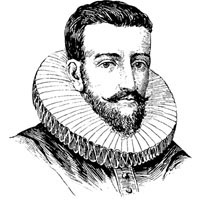
Many people who went to the Americas wanted gold, furs, or land. But there were some explorers who were looking for the "Northwest Passage," a passage through North America which would lead them straight to India or China. One such English explorer was Henry Hudson. He knew that all the explorers who had gone looking for this way had failed. But he had a different idea. He wanted to sail way up north and over Asia, then, he would sail down into China. The sun shines all day and night at the North Pole in the summer, so Hudson figured that would melt the ice to let his ships get through. But he was wrong, and because of the immense cold, he and his ship were forced to turn around and sail back to England. Hudson did not give up, though. He decided to try another route around the Northern coast of Russia. But as they sailed along their route, it started to get cold. He couldn't find a way through the ice, so he turned around. But he didn't go back to England this time. He sailed straight towards North America. When the crew saw that he was not giving up, they threatened mutiny if he did not turn around. So Hudson was forced to go back to Europe anyway. Hudson tried again, this time along  a different route. It was a hard route, and the sailors begged to go back, but Hudson would not be moved. Finally, the crew did what they had threatened to do on the second voyage. They set Hudson, his son, and some of the sickest sailors in a small life boat with no food or water. The rest of the crew had very hard time finding England again without their captain. No one ever saw Hudson again.

Tuesday, March 1, 2011

Two Kings, A Queen, and William Who Was Quiet

In my last post, I wrote that I have finished my history book by Susan Wise Bauer. Today, I read the first two chapters of the next book in the series. This book is titled Volume 3: Early Modern Times. It covers the time from Queen Elizabeth the First until the Forty-Niners in California. Today, I read about two kings, one queen, and a Dutch man named William the Silent.

        The two kings were related to each other.They were, in fact uncle and nephew. The nephew was Charles the Fifth's son, Philip, and he ruled some of his father's land. The rest was given to his uncle, King Charles's brother, Ferdinand, a little before King Charles died. Bauer doesn't say much about him in this chapter.

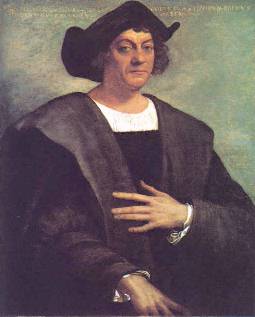
      Philip was the ruler of Spain, the country where Christopher Columbus had gotten his money to go to South America from. When Columbus claimed "India", he claimed it for Spain. So now, King Philip was trying to use that land to his advantage. He sent other explorers there, and they discovered that the land was not India, it was a different continent. From India, merchants bought spices, cloth, and many other things. These things were not found in South America, but the "conquistadors" found something even better. Gold. The Native Americans wore gold jewelry, and they told stories of a king called El Dorado, who was so rich he could take baths in gold dust. King Philip wanted this gold, so he sent miners to mine South America. Soon, Spain became rich. Gold and silver poured out of the mines. Philip became the richest king in the world, and his people became rich, too. But the miners who did the actual mining, were not rich. They were South American slaves, and they were treated badly in their own country. So now you know the story of the two kings. Now, onto William the Silent.

But first, we have to go back in time a little ways. William the Silent came into the world when Philip was only around six years old. The boys were only a few years apart, but they were brought up in very different cultures and religions. Philip was brought up to be a devout Catholic, however, William's German parents taught him to stick to the Protestant faith. When William was only a teenager, he inherited two huge provinces from his cousin. This could make him a very important man when he grew up, and Charles the Fifth knew that it would not be good if he was a Protestant and opposed Catholics. So, he had William brought to court and taught him all the things that an important man should know, especially how to be a good Catholic. Soon, William became the King's favorite page, and then, his trusted adviser.

When Charles left his throne to Philip, the new king put Willaim in charge of a big portion of the Netherlands. But William didn't always agree with the ways Philip governed his kingdom. He made laws against Protestantism, and didn't ask the leaders of Netherlands their opinion. Even though, William was now a Catholic, he understood how the Protestants felt.

William the Silent got his nick-name when he was visiting the court of a French king . The king did not realize that William had not always been a Catholic, and he told him that Philip was planning to kill all the Protestants in Netherlands. William was very mad, but he didn't show his anger or any emotion to the king. He did not even answer back. That is why he is called William the Silent.

After William got back to the Netherlands, he still pretended to obey Philip. But in secret he helped raise a small army against Philip. They went to the castle and asked Philip to take back the laws against the Protestants. But Philip would not. The group called themselves the Beggars, and they went through the country destroying Catholic churches and smashing their statues. William became an enemy of the king. A great war followed. Finally, seven provinces in the Northern Netherlands announced their independence from Spain, and they made William the Silent their king. William was eventually assassinated on the orders of the king, but the provinces became their own country, Holland. Bauer says that the Queen Beatrix who now rules Holland is William's great, great, great, great, great, great, great, great, great, great, great granddaughter.

You remember Queen Mary of Scots, (the cousin of Queen Elizabeth,) who was the queen of Scotland. She inherited the crown when she was less than a week old, so her mother became her regent and ruled for her. But Mary's mother was Catholic, and many Protestant noblemen didn't want a Catholic ruler, so they put themselves in charge of ruling the country until Mary was old enough. Mary's mother wanted her to be a good Catholic, so she sent her to France, where there were many other Catholics. Mary never saw her mother again.

When Mary was 18, she traveled back to Scotland to begin her rule. She said that she would not make people change their religions, and she even married a Protestant, but despite Mary's peacefulness, her husband, Lord Darnley, wanted more power. He didn't like that Mary was still a Catholic, so he and some other lords began to plan to overthrow his wife and make Catholicism illegal. But Mary found out about this secret, and she ran away from the castle to make an army for herself. When Mary came back, the others in her husband's plot had fled, but Darnley, who was still there, blamed it all on the absent lords. Mary pardoned him, but only for the time being. Later, the house in which Darnley was in blew up, and many blamed it on Mary.


Queen Mary of Scots became less and less popular, and finally, she was forced to sign a paper making her son, James, the king of Scotland. (You remember that when Elizabeth the First died, James also became the king of England.) Mary fled to Elizabeth's court, but after a while, her own cousin had her executed. What a tragic end to her story!

Thursday, February 24, 2011

England and More About the New World


John Cabot

You have heard of Colombus and how he made his voyages. About five years after Columbus found "India", John Cabot, another explorer from England, started out from Europe with only twenty men and one ship! But the journey did not take very long. It was just a matter of weeks before Cabot spotted land. It was an island! The island was huge, and had some grass and plants on it, (from what the sailors could see from the ship.) In the water around the island were many fish. The sailors let down a basket. Almost instantly is was full of good codfish. The men were delighted! This fishing was easy! Of course, Cabot went ashore and claimed the land for England. He sailed back to Europe and told everyone that he had found a shortcut to Asia. He hadn't, really. The land he found was simply part of North America. When he started his 2nd journey to America, he had five ships. But out of all of these five ships, only one made it back. It was all tattered and torn, and John Cabot, on one of the other four ships, was never seen again. However, this did not stop exploration. Many fishermen, hearing of the schools of fish, traveled over in their fishing boats. There they started a colony called St. Johns. When the men came back, their boats laden down with fish, many other fishers sailed over, too. But St. John's was not the most perfect village to live in year round. In the winter there was lots of ice and wind. Hardly anyone lived there in the cold months. St. John's was located in what we now call Canada.


a fish

      There once was another explorer whose name was Jaques Cartier. He was from France, and he was sent by the king of France to gain land for his country. Cartier and his sailors got to North America in less than a month. He made maps of the island of Newfoundland, where the fishing villages were, and of the tiny islands that were closeby. Now, Cartier had been sent by the king of France to get land for France, and he did this. But he also had another idea in mind. Cartier wanted to find the shortcut to China. As he was exploring Newfoundland and its surroundings, he found a river. This is now called the St. Laurence River. He knew that the river went for a long ways, but he did not know how long. He thought that maybe this was a river that cut across the continent  and led to China. So he made friends with the Indians. He met two tribes, one called the Micmacs, and one called the Hurons. The Micmacs had discovered how to survive the hard winters, using wigwams covered with animal skins. Cartier wanted to know what the name of the land was. The Micmacs told him that they called it "our village." But in Micmac, that sounds something like Canada. So Cartier called it that. The Hurons also lived close by. Cartier wanted to sail down the river right away, but he knew that winter was coming, and that his men might not survive it. So he had to sail back to France. But in order to show the king what he had found, he asked that he might take the Huron Chief's two sons back to Europe. When he finally came back the next spring, the two boys were with him, even taller and stronger than before. The chief, Donnaconna, was so glad to see his sons that he allowed Cartier to sail down the river in safety and peace. But as the Frenchmen sailed down the river, they came closer and closer to the home of the Hurons. Donnaconna was getting nervous. How far would they go? Finally, he had had enough.  He stopped Cartier and told him to go away. But Cartier would not listen. He just kept on going down the water. But as they went farther and farther, the water was getting shallower and shallower. There were boulders and rapids. At last, Cartier knew it would be pointless to go further. The river obviously did not lead to China. When he returned to France, he captured and took Donnaconna with him to tell tales of treasure to the king. The chief died in France, and Cartier found no treasure in Canada, only worthless quartz. He never returned to Canada. The Americas were fascinating places to the people back in Europe. The Queen Elizabeth the 1st probably never saw it herself, and neither did many of her people. To some people in Europe, America was little more than a myth. But it was a good one, and many people were interested in seeing for themselves the mysterious "New World."

the spanish armada

              At this time, probably around 1534, ( since Bauer doesn't always tell the history in chronological order,) Spain was probably the biggest country in all of Europe, plus it had many settlements in the New World. Spain wanted to be the biggest country in the world, but she had a problem. Her problem was England. The English sailors were robbing Spanish ships and sailing in Spanish waters. They were sending explorers that got in the way of Spain's settlements. Eventually, Spain got so angry with this, that the king of Spain, King Philip, sent an angy message to Queen Elizabeth. He told her to keep her ships on her own waters, or Spain would begin a war. Elizabeth did not want a war, so she sent a peaceful promise back to Spain saying that she would. But secretly, she told her sailors that she did not care if they robbed the Spanish. So now the English sailors were pirating Spanish fleets more than ever because they did not have to worry about being punished by the Queen. England grew richer and bigger, and Spain grew angrier and angrier. Finally, she declared war on England. The king started builing a large army of ships. The 130 ships were called the Armada. Meanwhile, England was frantically assembling her army of ships. When the Spanish ships came sailing into England, their tactic was "grappling and boarding." That means they planned to hook English ships along side them, and then scramble on board to overtake the ships. But the English had a better plan. Their ships were small with guns in the sides. The English just shot holes in the sides of the Spanish ships, and finally they won. Spain was defeated!!!! Now England was becoming the most powerful country in Europe.

  I have now come to the end of the book by Susan Wise Buaer titled The Story of the World: Volume 2: The Middle Ages. It began from the fall of Rome, and now I have ended in the the Rise of the Rennaissance.
 I really enjoyed reading this book, and I can not wait to start Volume 3.

Thursday, February 17, 2011

Exploration

Imagine this. You are the ruler of a country in Europe. Right now, it is pretty peaceful.  You have complete control over your small country, and no wars are going on. You are getting kind of bored with all of it. What can you do to make your life a little more exciting?
Make your country bigger, that’s what! You don’t want to start a war, so the ideal idea would be to find some land that no one else has found or claimed yet. That means that you should send some ships out to sea to where Columbus found land. Since hardly any of it has been claimed and you do not know how big it is, then it would be a perfect place to send settlers.
That is what Queen Elizabeth the First was thinking, (more or less,)when she sent ships to America to claim land for England. One reason why she did this, was that Spain was getting bigger and bigger. It now covered most of Italy, all of Spain itself, and other parts of Europe. If Spain took over North and South America, it would be the biggest country in the world! So Elizabeth gave the job of organizing the exploration to one of her favorite knights, Sir Walter Raleigh. Raleigh filled two ships with food, men, and provisions, and sent them off to America. When the sailors returned, they were very optimistic. There had been fertile soil, friendly Indians, black pearls, soft animal skins, and some new plants that they had never seen before. These were potatoes and tobacco. So Raleigh sent more ships, this time filled with settlers, to settle in the New World. But the people begged to be allowed to come back. The winters were cold, the ground was not very fertile, they were hungry, and the Indians were not being too friendly.  Finally, they sailed back in their ships.  But they left 15 soldiers to try and guard their town. When the second group of settlers sailed past the island the earlier colonists had been living on,  they saw no one. All the houses were in ruins, and there was no sign of human life. But they found only the skeleton of a soldier. But the commander of the ship was tired of having the colonists on board. He told them to get off and to go live on Roanoke Island. The settlers could not get off because they had only a few small boats, and so the commander and his sailors sailed away. The colonists persuaded a man named John White to England in one of the small boats. He arrived safely and asked for more food and provisions for the colonists, but England was now at war, and Elizabeth the First could not spare any ships for the mission at this point.
 White was not able to get back to the colony for at least three years! Finally, he got on a warship headed to fight the Spanish in South America. The captain agreed to stop at Roanoke Island to see the colonists, but when White  got there, as before, there were only ruins. There were no signs of life anywhere. There were no windows, doors, or walls, only the foundations of the houses. This made White think that the people might have moved there houses somewhere else. But he searched the whole island to no avail. He found only a word carved into a tree; CROATION. No one knows what happened to the lost colony of Roanoke.

Eventually, Sir Walter Raleigh lost his favor with the queen because he fell in love with one of her maids, and the maid became pregnant. Elizabeth wanted her knights to be only dedicated to her service, and when she died there were still no English colonies in America.

Tuesday, February 1, 2011

Changes in the World

You have probably heard of Martin Luther King and the changes he made in society. He helped the African-American black people gain their rights. You might also have heard of Martin Luther. He is not quite so recent, but he made a lot of important changes in the world that affect you whether you have heard of him or not. And in England, King Henry the 8th was building on those changes, building to his own advantage. In the early middle ages, Catholics were basically the only kinds of Christians, and the pope was the head of the church. This meant that because most people were Catholic, the pope had a lot of power. He could even tell kings what to do! The Catholic church frightened many people into giving them a lot of money, by saying that God would forgive all their sins if they gave a certain amount. That was called "indulgence". Martin Luther read the Bible carefully and he found out that God does not save us if we do good deeds, or if we give a lot of money to the church. God has already saved us, if we will believe in him. Martin Luther wrote a long list of things that were wrong about the Catholic church and indulgences. People began to think about what he was saying, and many of them started to disagree with the Catholics, too.The Catholic church did not like this, but the king of England did.
          The King of England at this time was a man named Henry the eighth. He did not want a war to start after he died over who would become the next king. He wanted his son to get immediate access to the royal throne. But his current wife did not bear him any sons, only a daughter named Mary. Henry wanted to get rid of his wife, and so he had to ask the pope if he was allowed to. But the pope said no, and so Henry got angry. He liked Martin Luther's ideas, that the pope should not always be the one in charge. He quickly told his kingdom that he was the all supreme ruler, and he got to make his own decisions. Now he could divorce his wife, Catherine.

Henry the eighth married again. His new wife, Anne Boleyn, had her head cut off because she did not give him a son either. Just another daughter named Elizabeth.

His third wife was a little luckier. Jane Seymour bore him a son named Edward, but she died in the process.

 Anne of Cleves was next, but Henry didn't like how she looked, so he sent her back to Germany, where she came from. Anne was happy, too. The king was getting old and did not look all that great either.

 Catherine Howard's head was cut off, not to long after she became the fifth wife of the king.


Catherine Parr, the king's 6th and last wife did a good job of taking care of him in his old age. She was also a good nurse to the children. This third Catherine died after Henry the eighth's death.

Susan Wise Bauer has a rhyme to help you remember all Henry King of England's wives.

Divorced, beheaded, died,
Divorced, Beheaded, survived

Martin Luther was not the only one who was changing things. All over Europe, people were settling down, because there was not much war going on, and so they had more time to make art and read. People began to read the manuscripts from the Romans and the Greeks, and so they were able to make science discoveries based on what they learned from the papers. They tried making Roman-style sculptures and painting Greek-style pictures. Architects began to build in the styles that had developed hundreds of years ago. And people began to "relearn" how to read.
 How many books are in your church, your house, your library? Probably more that five, at least, that is what I am guessing. But that is about how many were found in a church, because libraries had not been invented yet, and books were only found in the houses that had very rich owners, because they were very, very expensive.. The books were chained to the wall, so that no one would steal them. A book might take a lifetime to finish. Books were very valuable and very rare, even when the discovery of paper was made by the Egyptians. But one day, a guy called Johannes Gutenberg made a discovery. He learned how to make a printing press. And what is more, he made it out of an old wine press! Because of Gutenberg, books became much easier to make, and so more people were able to have them. They became less expensive, and more people learned to read. I can not now imagine a life without books.

Thursday, January 20, 2011

India, "India," and America

Once, the land of India was split into many different countries. These countries were all ruled by noblemen or small kings. One of these countries was called Delhi. It was ruled by the Sultan of Delhi. India was getting poorer and poorer. It was having trouble ruling itself. It needed a leader. And finally one came. But this ruler was not from India, he was from the Ottoman Turks! His name was Babur. When Babur saw that the Sultan of Delhi was having trouble ruling his kingdom, he decided to conquer it. He had only 12,000 men, and the Sultan had 100000! But his men rode on fast horses, while the Sultan's rode big lumbering elephants. Babur was easily able to conquer Delhi. Then he conquered all the countries around it!   Babur was a good emperor, and while he was a Muslim many of his subjects were Hindus. Babur let them continue doing their own thing, while he did his. Although, he ruled India fairly, he was homesick. He thought India was a dull country, so he planted gardens. All together, Babur ruled in India for four years. Then, he died. His son, Humayan reigned, but was driven out of the country. When he came back, he was not very successful. Finally, he slipped on his library steps, bumped his head, and died. His son, Akbar, was a far better king. He conquered more and more kingdoms until his empire covered half of India!
While India was thriving, Europe was looking for it. Traders wanted to find an easier way to get to India than across  Africa. Christopher Columbus thought that the world was round, and so he would get to India if he just sailed West far enough. He was right of course, but he did not know about North and South America. When he finally sailed across the ocean, in ships provided by Queen Isabella of Spain, he thought it was India! He did not find any gold or spices but he did find parrots, peppers, and pineapples, not to mention the "Indians." He made many voyages back and forth but never did he realize it was a new continent. Many other explorers followed in Columbus's wake. Amerigo Vespucci gave America the name it has today. Magellan was the first to sail around the world. Well, he did not make the journey, for stopping to fight in an tribe's war, he was killed. One out of five of his ships came back to Portugal, and from 280 men, there survived less than 36. But he had the idea and that is what counts for a lot.

Wednesday, January 12, 2011

Ferdinand, Isabella, and Mansa Musa

Long ago, Spain conquered Muslim land. After that, there were three countries that made up Spain. But these countries didn't think that they were big enough. One of the kings, whose name was Enrique and who ruled over the small kingdom of Castile, wanted more soldiers so that he could make his army bigger and conquer other kingdoms. He told one of his noblemen Pedro Giron, that if he would give him some soldiers, he might have the king's sister, Isabella, for his wife. Did Isabella like this idea? No! She did not. The nobleman was over forty and she was only thirteen! She had also heard that he was mean and got drunk a lot. But was she asked her opinion? No! She was not. Did Pedro Giron, the nobleman like this idea? Yes, he did. And he was asked, too. Marry the king's sister? Would he like to? Of course! But before the marriage could take place, Pedro Giron died of stomach pains. Isabella was overjoyed! Her brother was not. A few years later, Enrique decided that Isabella would marry the king of Portugal, so that the two kingdoms could become one. Did Isabella like this idea? No she did not. The king of Portugal was old and fat and old enough to be her father!But was Isabella asked what she preferred? No! She was not. And this time she decided to do something about it. So she sent a secret message to the young Prince of Aragon. She had heard, even though they had never met, that he was kind, handsome, and her own age. Ferdinand agreed to come and meet her in a secret place. Four days after they met, they were married. Did Enrique like this idea? No! He did not. But he wasn't asked his opinion either. When Enrique died half a dozen years later, Isabella became queen. In time, Ferdinand also inherited the throne of Aragon. They united the two countries in to one big country of Spain. Later, they also conquered the land of Granada, where many Muslims lived. Now that they owned the whole country of Spain, Ferdinand and Isabella declared it to be and only Christian country. They forced all the Jews to leave. While we remember Ferdinand and Isabella for uniting Spain, which was a good thing, we also remember the horrible thing they did to the Jews in making them leave the land they had lived in for so long.
        While Ferdinand and Isabella were reigning in their Spain, the world of the unknown lay out before them. Most people felt that places like Africa were dark and dangerous. However, the land of Africa thrived in its own special way. In the Middle Ages, much of Africa was roamed by nomadic tribes who lived off the land. But there were also many cities. Three of them were named Ghana, Mali, and Songhay. Ghana became rich and powerful because of the people who traveled through it. Traders carrying gold, salt, and other things to trade were taxed to pass through the city. The city of Ghana did very well for a long time. But then it began to fall apart because its kings would not convert to Islam. Other cities attacked it again and again. It got weaker and weaker. Soon Mali became the more important city. It copied Ghana and taxed the traders who went through. But it was and Islamic kingdom. One of the most famous kings of Mali was a man named Mansa Musa. Not only did he expand his army and his kingdom, he took a pilgrimage to Mecca, the Islamic holy city! That attracted the attention of the world. Soon, maps showed the city of Mali. Because of Mansa Musa, people in the Middle Ages learned about the country of Mali. But after the death of Mansa Musa, the kingdom of Mali began to fade away just like Ghana had. And, like Ghana, it was replaced by a new and larger kingdom. Songhay grew until it covered the entire region of what had once been Mali and Ghana. It had universities in its towns and many, many schools busy marketplaces and temples were also commonly found. The explorer Leo Africanus wrote about his travels in the country of Songhay. His book was called History and Description of Africa and the Notable Things contained therein. He wrote about the capital city of Timbuktu and its inhabitants, what the houses were made of,  and such. I think I would like to read his book.